The Living World of Ecosystems
Unit One
An ecosystem is a community of living organisms, known as biotic factors, interacting with each other and with their non-living, or abiotic, environment. This interaction forms a complex web of relationships that ensures the survival of organisms and the functioning of the ecosystem. Ecosystems can vary in size and type, ranging from a small pond to an entire forest. Within an ecosystem, the relationships between living organisms and their physical surroundings maintain a balance that supports life.

Introduction to Ecosystems
These are the living components of an ecosystem, including plants, animals, fungi, bacteria, and any other organisms. Biotic factors are divided into producers, consumers, and decomposers:
-
Producers: These are organisms, like plants and algae, that produce their own food through photosynthesis.
-
Consumers: These organisms, such as herbivores, carnivores, and omnivores, obtain energy by feeding on other living organisms.
-
Decomposers: These organisms, like fungi and bacteria, break down dead matter, returning essential nutrients to the environment.
Biotic Factors
These are the non-living components that influence ecosystems. They include:
-
Sunlight: Provides energy for photosynthesis, the process used by plants to produce food.
-
Water: Essential for all living organisms and plays a role in nutrient transportation and temperature regulation.
-
Temperature: Affects metabolic rates and the types of organisms that can survive in a given environment.
-
Soil: Provides nutrients for plants and a habitat for many organisms.
Abiotic Factors
Together, biotic and abiotic factors create an environment where organisms depend on one another and their surroundings for survival.
Types of Ecosystems


Energy Flow
Trophic Levels:
Producers (Autotrophs): These are organisms that produce their own food using sunlight (photosynthesis) or chemical energy (chemosynthesis). Examples include plants, algae, and some bacteria.
-
Consumers: These organisms cannot produce their own food and rely on eating other organisms:
-
Herbivores (Primary Consumers): Animals that eat plants. Example: deer, rabbits.
-
Carnivores (Secondary/Tertiary Consumers): Animals that eat other animals. Example: lions, eagles.
-
Omnivores: Animals that eat both plants and animals. Example: bears, humans.
-
-
Decomposers: Organisms like fungi and bacteria that break down dead organic material, returning nutrients to the ecosystem.

Food Chains and Webs
A simple linear sequence showing how energy flows from one organism to the next. For example: Grass → Rabbit → Fox.

Energy Transfer and the 10% Rule
A more complex network that shows multiple feeding relationships in an ecosystem. Food webs better represent real-life ecosystems, as organisms often feed at multiple trophic levels.
Ecological Efficiency
Gross Primary Productivity (GPP)
-
Definition: GPP is the total amount of energy produced by plants through photosynthesis. It represents the total energy captured from sunlight in an ecosystem.
Net Primary Productivity (NPP)
-
Definition: NPP is the energy that remains after plants use some for respiration. It is the energy available for primary consumers (herbivores). NPP = GPP - Respiration.
Factors Influencing Productivity
-
Water Availability: More water increases plant growth and productivity.
-
Sunlight: More sunlight means more photosynthesis and higher GPP.
-
Nutrient Levels: Nutrients like nitrogen and phosphorus are essential for plant growth.

Nutrient Cycles
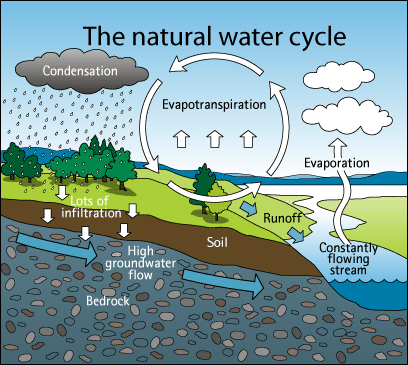
The Water Cycle
-
Steps: Water moves through ecosystems in a continuous cycle:
-
Evaporation: Water from oceans, lakes, and rivers turns into vapor.
-
Condensation: Water vapor cools and forms clouds.
-
Precipitation: Water falls as rain, snow, or hail.
-
Infiltration: Water soaks into the ground, replenishing groundwater.
-
Runoff: Water flows over land and returns to rivers, lakes, and oceans.
-

The Carbon Cycle
-
Key Processes:
-
Photosynthesis: Plants take in CO2 and convert it to glucose.
-
Respiration: Animals and plants release CO2 back into the atmosphere.
-
Fossil Fuel Combustion: Burning fossil fuels releases stored carbon into the atmosphere, contributing to climate change.
-
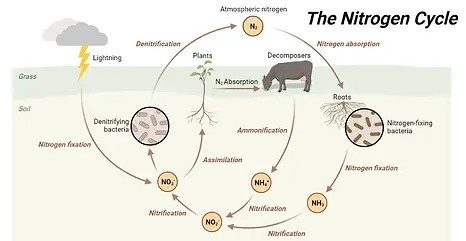
The Nitrogen Cycle
-
Key Processes:
-
Nitrogen Fixation: Bacteria convert nitrogen gas (N2) into a usable form (ammonia).
-
Nitrification: Bacteria convert ammonia into nitrates and nitrites, which plants can absorb.
-
Denitrification: Bacteria convert nitrates back into nitrogen gas, returning it to the atmosphere.
-
Human Impact: Excess fertilizers can lead to nutrient pollution and harm aquatic ecosystems.
-

The Sulfur Cycle
- Key Points: Sulfur moves through the atmosphere and the Earth. It’s released by volcanic activity and human activities like burning coal. Sulfur compounds contribute to acid rain, which can damage ecosystems
The Phosphorus Cycle
- Key Points: Unlike other cycles, phosphorus doesn’t have a gaseous phase. It moves through rocks, soil, and water. Phosphorus is vital for DNA and ATP in living organisms.

Species Interactions
-
Mutualism: Both species benefit. Example: Bees and flowers.
-
Commensalism: One species benefits, the other is unaffected. Example: Barnacles on a whale.
-
Parasitism: One species benefits at the expense of the other. Example: Tapeworms in a host.
Symbiosis

Mutualism: Clownfish and sea anemones have a mutualistic relationship in which clownfish receive protection and food scraps, while the anemone gains nutrients and cleaning from the clownfish.
-
Description: Predators hunt prey, maintaining balance in ecosystems. Adaptations like camouflage and speed help both predators and prey survive.
Predation
-
Interspecific Competition: Between different species. Example: Lions and hyenas competing for prey.
-
Intraspecific Competition: Within the same species. Example: Two trees competing for sunlight.
Competition

Otters are keystone species because they regulate sea urchin populations, preventing overgrazing of kelp forests, which supports the entire marine ecosystem.
-
Importance: Keystone species have a disproportionately large effect on their ecosystems. Without them, ecosystems could collapse. Example: Wolves in Yellowstone.
Keystone Species
Deforestation
-
Effects: Deforestation leads to habitat loss, reduced biodiversity, and increased greenhouse gas emissions, contributing to climate change.
Pollution
-
Air Pollution: Leads to health problems and climate change.
-
Water Pollution: Affects aquatic ecosystems and drinking water.
-
Soil Pollution: Reduces soil fertility and affects agriculture.
Habitat Loss and Fragmentation
-
Causes: Urbanization, agriculture, and deforestation. Fragmentation isolates species, reducing genetic diversity and making them more vulnerable to extinction.
Invasive Species
-
Definition: Non-native species that outcompete native species, disrupt food webs, and alter ecosystems. Example: Zebra mussels in North America.
Human Impact